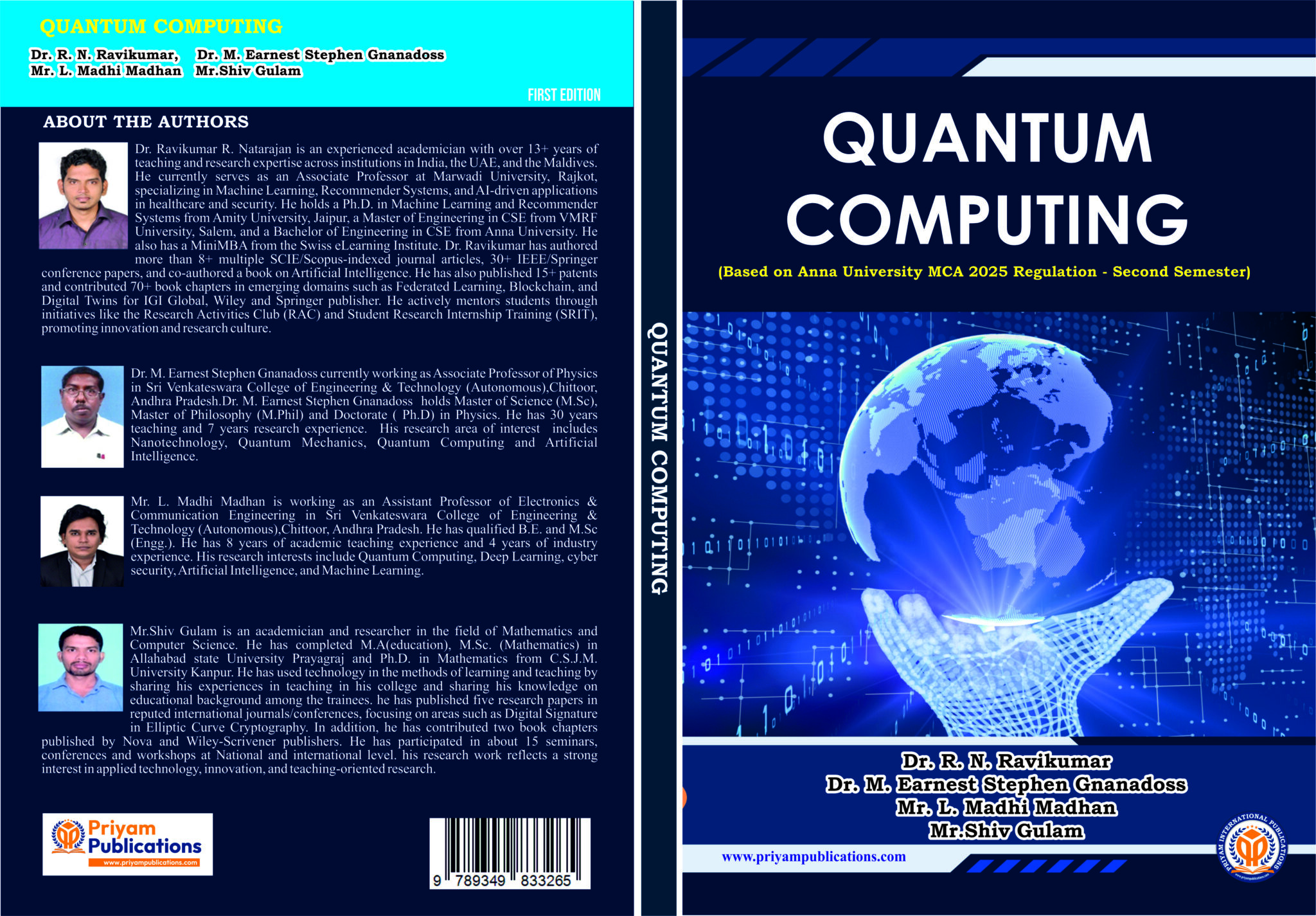
Quantum Computing is a revolutionary field of technology that combines the principles of quantum physics and computer science to solve problems that are difficult or impossible for classical computers. By using quantum phenomena such as superposition and entanglement, quantum computers have the potential to perform highly complex calculations with remarkable speed and efficiency. Quantum Computing is designed to provide readers with a clear understanding of the concepts, principles, and emerging applications of this advanced technology. This book explores the fundamental topics of quantum computing, including qubits, quantum gates, quantum circuits, superposition, entanglement, quantum algorithms, and quantum communication. It also explains the differences between classical and quantum computing and discusses the role of quantum systems in areas such as cryptography, artificial intelligence, optimization, healthcare, and scientific research. The content is presented with conceptual explanations, examples, and application-oriented discussions to help readers understand both theory and practical significance. The purpose of this book is to equip students, researchers, technology enthusiasts, and professionals with foundational knowledge of quantum computing and its future possibilities. By combining scientific principles with technological advancements, this book aims to encourage curiosity, innovation, and analytical thinking in the field of next-generation computing. It serves as a valuable guide for anyone interested in understanding the transformative impact of quantum computing on science, technology, and society.