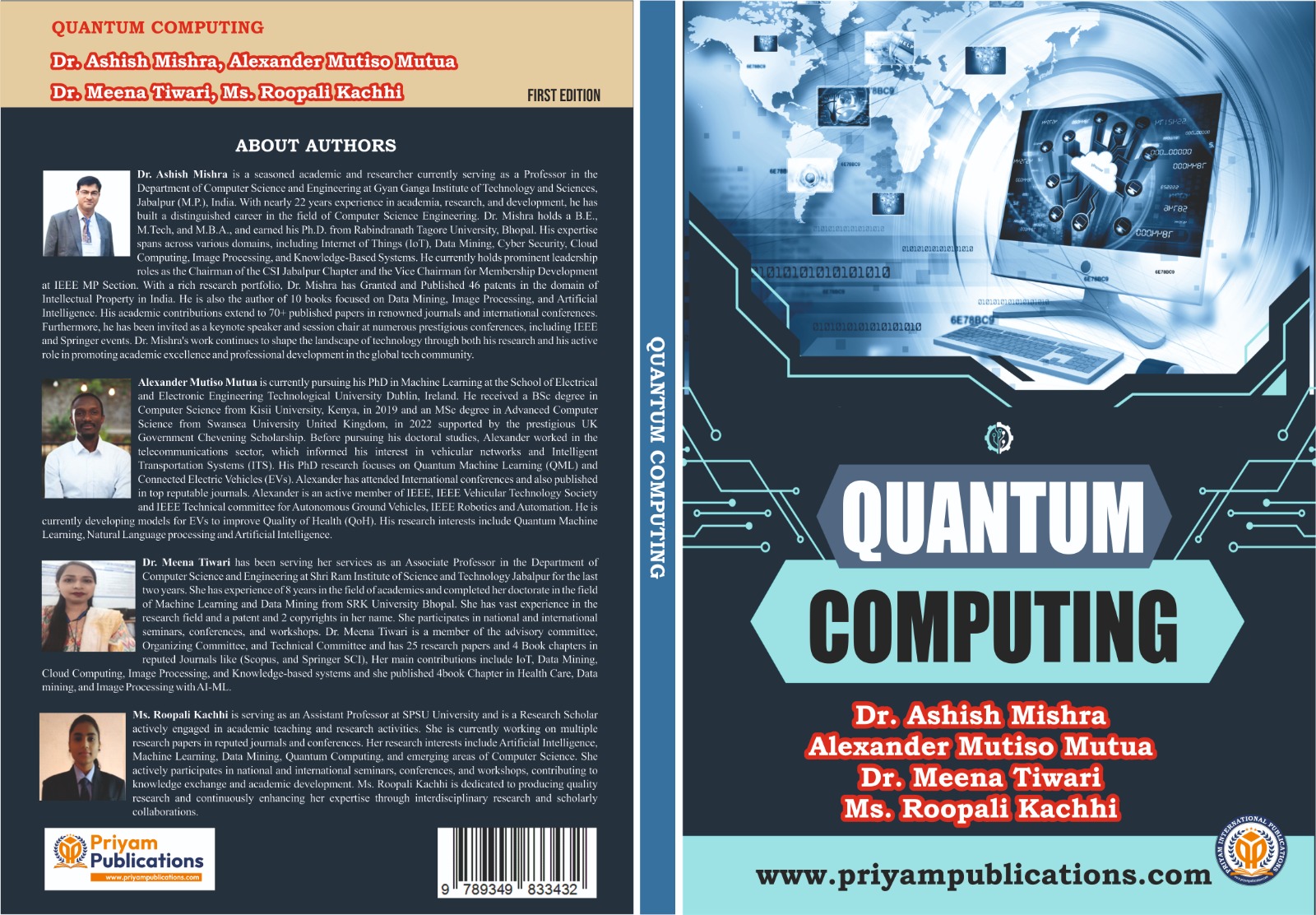
Quantum Computing is an emerging field of technology that combines the principles of computer science, mathematics, and quantum physics to solve complex problems beyond the capabilities of classical computers. With the potential to revolutionize industries such as cybersecurity, healthcare, finance, artificial intelligence, and scientific research, quantum computing is shaping the future of advanced computational systems. Quantum Computing is designed to provide readers with a clear understanding of the concepts, technologies, and applications of this rapidly developing field. This book explores the fundamental principles of quantum computing, including qubits, superposition, entanglement, quantum gates, quantum algorithms, and quantum communication. It also highlights the differences between classical and quantum computing and explains how quantum systems can perform computations more efficiently for certain complex problems. Practical examples, conceptual explanations, and emerging real-world applications are included to help readers understand both the theoretical and practical aspects of quantum technologies. The purpose of this book is to equip students, researchers, technology enthusiasts, and professionals with foundational knowledge of quantum computing and its future potential. By combining scientific concepts with modern technological applications, this book aims to encourage innovation, critical thinking, and curiosity in the field of next-generation computing. It serves as a valuable guide for anyone interested in exploring the transformative power of quantum computing in the digital age.